JillLebofsky may earn a commission if you buy through links on this page, at no extra cost to you. That does not change what we report.
Part of our Respilean overview. Last checked November 6, 2026.
Respilean side effects have not been studied, and the label says plainly that "The safety of this product has not been determined"[1]. The likely problems come from two ingredients: ginger and bromelain can upset the stomach, and ginger may add to bleeding risk with blood thinners. In ginger joint trials, users were 2.33 times as likely to drop out as people on placebo[2].
Is Respilean safe? Safety at a glance
Respilean's safety is unknown, and the biggest danger is indirect: using it in place of inhalers, oxygen or prescribed treatment. The vendor's affiliate copy pitches breathing "without the dependence on inhalers or oxygen tanks"[3]. For anyone with COPD or asthma, stopping a prescribed medicine can be life-threatening.
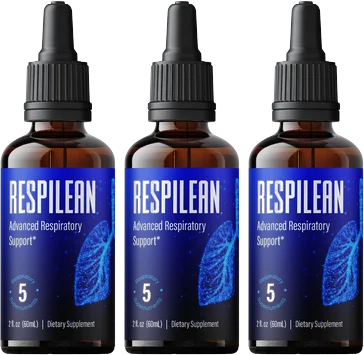
On the product itself, the label hides every dose inside a 500 mg blend, so nobody can say how much ginger or bromelain is in a 2 ml serving[1]. The label says to keep it out of reach of children under 12. Our checks of FDA recall and adverse event databases on November 6, 2026 found no records naming Respilean, which tells you no reports were filed, not that it was tested.
What side effects are possible?
Expect mostly mild digestive effects, based on the ingredient research, plus allergy and bleeding concerns for some people. None of these was measured for Respilean itself.
Digestive
NCCIH lists heartburn, abdominal discomfort, diarrhea and mouth or throat irritation for ginger[4]. Bromelain can cause stomach upset and diarrhea[5], and a 2023 meta-analysis added flatulence, nausea and headache[6]. Taking the liquid in a drink or with food may be easier on the stomach.
Sensitivity and allergy
Bromelain comes from pineapple stem, so avoid Respilean if you are allergic to pineapple[5]. Workers who handled mullein have developed contact dermatitis[7], and there are no safety data on daily mullein leaf extract.
Medication-related
Ginger is on a systematic-review list of herbs tied to higher bleeding risk with warfarin[8], though platelet trials split four and four[9]. Cordyceps was given with cyclosporine in transplant studies[10].
How to lower your risk if you try it
Your doctor should approve it first if you have a lung condition or take daily medicine. After that, a few habits keep any problem small:
- Start with one 2 ml serving a day and skip the optional second serving for the first weeks.
- Take it in a drink or with breakfast if your stomach is sensitive.
- Write down any new symptom and the date it began, so your doctor can judge it.
- Keep using every inhaler and prescribed medicine exactly as directed.
- Stop at the first sign of an allergic reaction, bleeding or bruising.
Which ingredients deserve extra attention?
Ginger and bromelain carry the clearest flags; mullein and Cordyceps militaris carry the biggest unknowns. The table lists only what our evidence notes support.
| Ingredient | Safety issue | Why it matters |
|---|---|---|
| Ginger root | Heartburn, diarrhea; bleeding risk flag with warfarin | Dose hidden, so the size of the risk is unknown |
| Bromelain | Stomach upset, diarrhea, nausea, headache | Avoid with pineapple allergy |
| Mullein leaf | Skin dermatitis in workers; no oral leaf safety data | Daily oral use has not been studied |
| Cordyceps militaris | Interaction with immunosuppressants not assessed | Matters after a transplant |
| Lemon peel | No safety issue in our notes for swallowing it | Likely a flavor role |
LiverTox lists ginger as generally recognized as safe, with no liver injury reported across more than 100 trials (archived copy)[11]. See the Respilean ingredients guide for what each one is.
Which medicines could interact?
Ask a pharmacist before taking Respilean with blood thinners, antiplatelet drugs or immunosuppressants. Bring the bottle so they can read the label.
- Warfarin and other anticoagulants: ginger is on a bleeding-risk list with warfarin[8].
- Antiplatelet drugs: ginger's effect on platelets is unclear, with trials split evenly[9].
- Before surgery: stop and tell your surgeon, because of the bleeding flag.
- Cyclosporine and other transplant drugs: Cordyceps was studied alongside them; interaction potential has not been assessed[10].
- Inhalers and other COPD or asthma medicines: we found no interaction data either way, so keep taking them as prescribed and ask before adding anything.
If your pharmacist clears it and you want to try a bottle, use the vendor checkout so the refund terms apply.
Pregnancy, breastfeeding and who should ask a doctor first
Several groups should talk to a doctor before a first dose. The research on pregnancy is thin for every ingredient.
- Pregnant women: NCCIH says ginger "may be safe" but to ask a provider[4]; little is known about bromelain[5]; there are no data for mullein.
- Breastfeeding mothers: little is known for ginger or bromelain.
- Anyone with COPD, asthma or another lung disease.
- People on blood thinners, antiplatelets or transplant drugs.
- Anyone with surgery booked.
- People allergic to pineapple.
- Children under 12: the label says to keep it out of their reach.
Which symptoms need a doctor right away?
Stop Respilean and get help at once if a side effect looks serious. Call 911 or go to an emergency room if you have:
- Severe or worsening shortness of breath
- Blue or gray lips, face or fingertips
- Chest pain or pressure
- A rescue inhaler that is not helping
- Swelling of the lips, tongue or throat, or hives with trouble breathing
- Coughing or vomiting blood, black stools or unusual bruising
- Confusion, fainting or severe drowsiness
Safety conclusion
Going by its ingredients, the Respilean side effects most likely to show up are digestive, but nobody has tested the product, and the label admits its safety is undetermined. Skip it if you take blood thinners or transplant drugs, are allergic to pineapple, or are pregnant without your doctor's approval.
Above all, keep your inhalers and prescribed care. Our does Respilean really work page explains why the evidence for breathing is missing, and Respilean complaints covers refund issues.
Back to the Respilean overview.
Frequently asked questions
Can Respilean cause diarrhea?
It might. Respilean contains ginger and bromelain, and both are linked to diarrhea and stomach upset in NCCIH guidance and trial data. The product itself has not been studied, and the doses of each ingredient are hidden in a 500 mg blend.
Can I take Respilean with warfarin?
Ask your doctor or pharmacist first. Respilean contains ginger, which appears on a systematic-review list of herbs linked to higher bleeding risk with warfarin. Bromelain is also in the blend. Do not start it on a blood thinner without approval.
Is Respilean safe for people with COPD?
Its safety is not established; the label says so. It may be used alongside care only with your doctor approving it, and it must never replace inhalers, oxygen or prescribed treatment. Get emergency care if breathing suddenly gets worse.
Can kids take Respilean drops?
The label says to keep Respilean out of the reach of children under 12, and directions are written for adults. No safety data exist for children. Ask a pediatrician about any breathing problem in a child instead.
Does Respilean have FDA warnings or recalls?
Our search of openFDA recall and adverse event records on November 6, 2026 found none naming Respilean. We did not check FDA warning letters or FTC actions, so we cannot say whether any exist.
Sources
- Respilean Supplement Facts label. Respilean vendor, read November 6, 2026.
- Efficacy and safety of ginger in osteoarthritis patients: a meta-analysis of randomized placebo-controlled trials. Osteoarthritis and Cartilage, 2015, read November 6, 2026.
- Respilean affiliates page. Respilean vendor, read November 6, 2026.
- Ginger. National Center for Complementary and Integrative Health (NCCIH), read November 6, 2026.
- Bromelain. National Center for Complementary and Integrative Health (NCCIH), read November 6, 2026.
- Efficacy and safety of bromelain: a systematic review and meta-analysis. Nutrition and Health, 2023, read November 6, 2026.
- Occupational dermatitis from Gordolobo (Mullein). Contact Dermatitis, 1985, read November 6, 2026.
- Warfarin and food, herbal or dietary supplement interactions: a systematic review. British Journal of Clinical Pharmacology, 2021, read November 6, 2026.
- The effect of ginger (Zingiber officinale) on platelet aggregation: a systematic literature review. PLoS One, 2015, read November 6, 2026.
- Clinical application of Cordyceps sinensis on immunosuppressive therapy in renal transplantation. Transplantation Proceedings, 2009, read November 6, 2026.
- LiverTox: Ginger (archived copy). National Library of Medicine, read November 6, 2026.
This page is general information, not medical advice. Dietary supplements are not reviewed by the FDA for safety or effectiveness before they are sold and are not intended to diagnose, treat, cure or prevent any disease. Talk to your doctor before taking any supplement, especially if you are pregnant, nursing, take medication or have a health condition.